What is contra dancing?
What it is
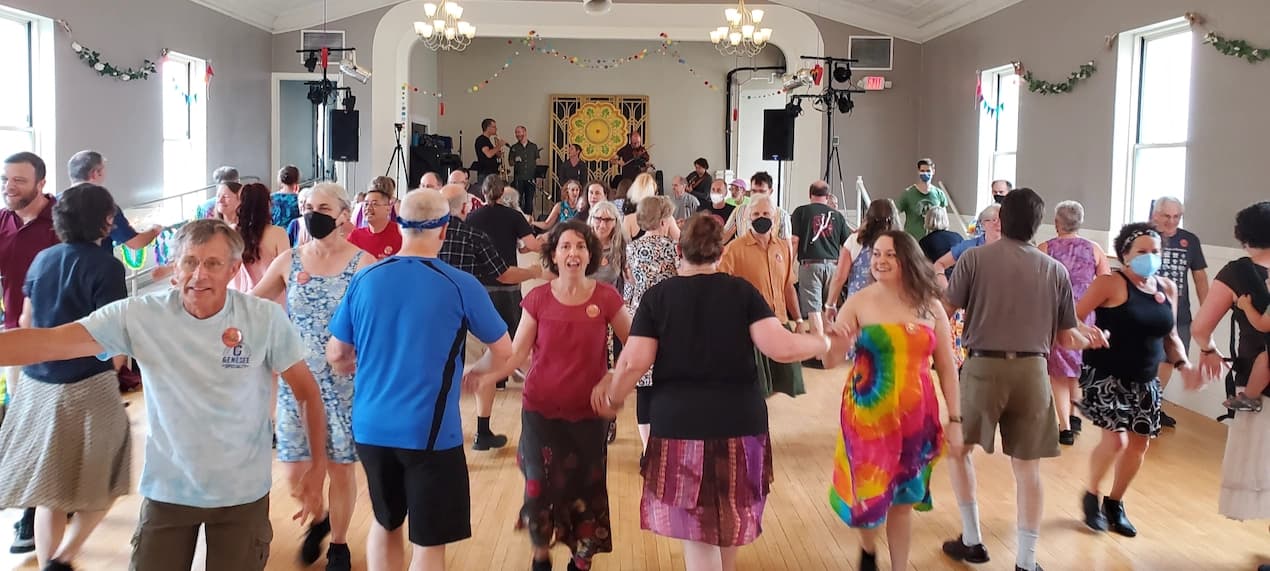
Contra dance is a social folk dance with roots going back over 400 years. Couples line up in two facing lines and dance a sequence of figures — some with the person beside you, some with the couple across from you, and some with everyone at once. After each sequence, you move down the line and dance with the next couple. By the end of the night, you've danced with everyone in the room.
Every dance is taught before it starts. The caller walks everyone through the figures, so no prior experience is needed. Experienced dancers gladly help beginners along during the dance itself.
Contra is not country line dancing.
Why you'll love it
Social — you interact directly and equally with everyone in the room.
Accessible — the basic footwork is simple. If you can walk, you can dance.
Not boring — there are thousands of arrangements of the figures, plus room for personal flourishes.
Live music, every week.
Welcoming — new dancers are genuinely welcomed and helped.
What to expect
- No partner needed. You'll change partners for each dance — it's actually good for beginners to dance a few with experienced partners, who can point you in the right direction. Anyone can ask anyone to dance regardless of gender, and same-sex pairings are common and welcome.
- What to wear: light, comfortable clothes — contra is mildly aerobic. T-shirts and shorts are common; swirly skirts are popular. Wear non-marking, low or flat shoes with clean soles, and please skip fragrance — some dancers have allergies. Bring a water bottle, and maybe a spare shirt for the drive home.
- Gender-free calling. As an organization, we have chosen to use gender inclusive terms in our dance. We often dance to Larks/Robins or positional calling. Our commitment to gender-free terminology reflects our belief that non-binary, gender-fluid, and LGBTQIA+ dancers are valued and welcome members of our community. Many of us have enjoyed dancing both Lark and Robin roles, and we've received a lot of positive feedback that this approach helps make Rochester's dance a safe and affirming space.
- Eye contact. Contra dancers often make eye contact during figures, especially the swing — it adds to the connection and helps prevent dizziness. If it feels uncomfortable, look at your partner's shoulder or forehead instead. No one is required to.
- Just show up. Every dance is taught by the caller before it's danced — no classes required.
Upcoming dances
No upcoming dances scheduled right now — check back soon.